canteen, or an open-plan office. Most of the time it starts silently — a surface
touched by hundreds of people, a door handle carrying a pathogen that survives for
days. By the time symptoms appear, the spread is already underway.Standard cleaning cannot stop it. What these environments need is
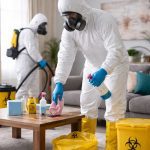
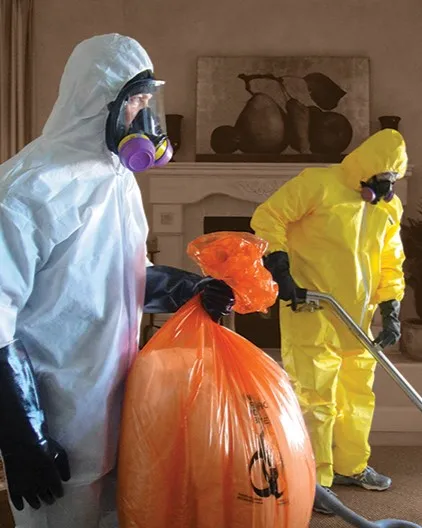
professional infection control cleaning — a systematic, evidence-based
process that eliminates pathogens rather than simply moving them around.At Dublcheck Bio Cleaning Glasgow, infection control is at the core
of what we do. For over 10 years, our certified technicians have responded to
norovirus outbreaks in Cathcart care homes, gastroenteritis clusters in Glasgow
primary schools, and confirmed TB cases in Pollokshields GP surgeries. We follow
Health Protection Scotland’s National Infection Prevention and Control Manual
(NIPCM) on every project — and we prove our results with ATP bioluminescence testing.
What Does Infection Control Cleaning Actually Involve?
Infection control cleaning is not deep cleaning with stronger products. It is a
structured process built around the biology of the pathogen present — because
norovirus, MRSA, C. difficile, and influenza all behave differently on
surfaces and respond to different disinfectant chemistries.
The core elements of a professional infection control clean include:
- Pathogen identification: Knowing what organism is present —
or suspected — determines every subsequent decision, from product selection to
PPE requirements. - EPA List N compliant disinfectants: Applied at the correct
concentration and dwell time for the target pathogen. A product wiped off
after 30 seconds instead of the required 5 minutes provides little protection. - Electrostatic disinfection spraying: Charged disinfectant
molecules wrap around surfaces — reaching the underside of desks, chair legs,
and complex equipment that manual wiping misses entirely. - Whole-room ULV fogging: For confirmed airborne or respiratory
outbreaks, fogging reduces pathogen load across an entire room simultaneously. - Biofilm disruption: Pathogens protected inside biofilms on
grout, textured plastics, and unsealed surfaces are physically broken up before
disinfectant is applied — otherwise the chemical cannot reach the organism. - ATP post-clean verification: The gold-standard hospital test
that measures residual contamination numerically after treatment, giving you
documented proof — not a verbal assurance.
If your property needs a standalone fogging treatment — for a drug-use property,
a post-flood sanitation, or a virus outbreak — read our full guide on professional fogging services in Glasgow
and what the process involves.
The Pathogens We Eliminate — and Why Each One Matters
Different settings carry different risks. Here is what Dublcheck routinely
decontaminates across Glasgow, and why each pathogen demands a specific approach:
Norovirus
The most common cause of infectious gastroenteritis outbreaks in care homes and
schools. Norovirus survives on surfaces for up to two weeks and resists many
standard disinfectants — it requires a chlorine-based or accelerated hydrogen
peroxide agent applied at the correct dwell time. When norovirus hit a Cathcart
care home in our client base, Dublcheck’s zoned decontamination protocol contained
the outbreak to three residents rather than allowing facility-wide spread.
MRSA and Drug-Resistant Bacteria
Methicillin-resistant Staphylococcus aureus is endemic in healthcare
settings and increasingly found in gyms and community facilities. It forms
persistent biofilms on high-touch surfaces that ordinary cleaning agents cannot
penetrate. Our biofilm disruption and deep sanitisation protocol targets
MRSA specifically at the surface level.
Clostridioides difficile (C. diff)
C. difficile produces heat-resistant spores that survive standard
disinfectants and persist on surfaces for months. Effective decontamination
requires sporicidal agents — typically sodium hypochlorite at 1,000 ppm or
above — combined with mechanical cleaning to disrupt the spore layer. Incorrect
product selection here is one of the most common failures in non-specialist
cleaning companies.
Influenza and Respiratory Viruses
Influenza A and B, RSV, and SARS-CoV-2 spread via both droplet and surface
transmission. Electrostatic spraying combined with HVAC system treatment
addresses both vectors simultaneously — particularly important in offices and
schools with shared ventilation.
Tuberculosis (TB)
TB decontamination requires validated TB-effective disinfectants and strict
respiratory PPE protocols throughout treatment. When a Pollokshields GP surgery
required emergency decontamination after a confirmed TB patient attended for
multiple consultations, Dublcheck mobilised within hours and supplied
NHS-accepted clearance documentation for regulatory inspection.
In situations where infection risk accompanies a biohazard event — such as
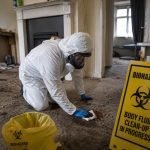
bloodborne pathogen exposure or an unattended death — our biohazard and trauma cleaning service
handles combined contamination under a single coordinated response, with the
same certified standards applied throughout.
Settings We Serve Across Glasgow
Care Homes and Sheltered Housing
Registered care settings in Scotland operate under Care Inspectorate oversight
and must demonstrate compliance with Health Protection Scotland’s NIPCM.
Dublcheck’s infection control service provides the documentation — ATP test
results, treatment logs, clearance certificates — that satisfies inspection
requirements. We can work within occupied facilities using zoned protocols,
treating affected wings while operations continue in clean areas.
Schools and Childcare Centres
After a Glasgow primary school brought us in during the October break following
a gastroenteritis cluster, the following full term recorded zero related pupil
absences. Deep sanitisation targeting classroom surfaces, door handles, toilets,
and canteen equipment — with post-clean ATP verification — is the standard we apply.
GP Surgeries, Dental Practices and Community Clinics
Healthcare premises require validated, documented decontamination. We carry the
certification, use the correct products, and supply clearance paperwork accepted
by NHS infection prevention officers and environmental health departments.
Commercial Offices and Call Centres
Shared workspaces concentrate transmission risk around keyboards, phones,
shared printers, and kitchen areas. Post-illness outbreak cleaning — with a
return-to-work certificate — protects both staff and employer from further
liability and disruption.
Hotels, Short-Term Lets and Hospitality Venues
A single confirmed norovirus case in a hospitality setting can trigger multiple
guest complaints, reviews, and a reputational impact that outlasts the illness
itself. Early professional intervention with documented clearance allows rapid,
confident reopening.
🦠 Outbreak Suspected? We Can Be On-Site Within Two Hours.
Our certified infection control teams operate 24 hours a day, every day of the year.
The sooner we respond, the less the outbreak spreads — and the lower your total
remediation cost.
- 📞 0141 370 0504 — 24/7 Emergency Line
- 💬 WhatsApp: 07939 969 738
- 📧 info@dublcheckbiocleaningglasgow.co.uk
For supported living or sheltered housing where residents may have complex social
or mental health needs alongside infection risk, our social and mental-health-related cleaning service
works alongside infection control treatment — maintaining full clinical standards
while handling each situation with the dignity and patience it deserves.
Why ATP Testing Sets Dublcheck Apart
Most cleaning companies ask you to trust the clean. Dublcheck measures it.
ATP bioluminescence testing is the same verification method used
in NHS hospitals and food manufacturing plants. After every infection control
clean, we swab treated surfaces and produce a numerical contamination reading
in seconds using a calibrated luminometer. If the result exceeds the safe
threshold, we re-treat before issuing clearance. The final ATP readings are
included in your documentation pack.
This matters because:
- Care Inspectorate Scotland increasingly expects post-clean verification evidence
- Insurance providers handling infection-related liability claims require documented proof
- Facility managers reporting to boards or governing bodies need more than a verbal assurance
- Environmental health officers investigating outbreaks require measurable outcome data
Protect Your Facility — Talk to Dublcheck Today
Over 10 years. Hundreds of outbreak responses across Glasgow. Every project
documented, verified, and certified. Whether you manage a care home, run a
school, operate a commercial premises, or need emergency decontamination for
a private property — Dublcheck delivers the standard your situation demands.
📞 0141 370 0504 |
💬 07939 969 738
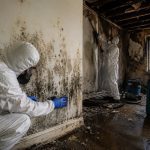
Flooding and water ingress create rapid bacterial contamination risk alongside
structural damage. If infection control is needed following a flood or water
damage incident, our environmental and structural restoration service
combines sewage decontamination, structural drying, and infection control into
a single managed response.
Areas Covered — Infection Control Cleaning Across Glasgow
Dublcheck responds to infection control and disinfection callouts throughout
Greater Glasgow and surrounding areas:
Glasgow City Centre · Govan · Shawlands
· Pollokshields · Cathcart · Partick
· Dennistoun · Bearsden · Springburn
· Rutherglen · East Kilbride · Paisley
· Motherwell · Hamilton · Clydebank
Unsure about your postcode? Contact us directly and we will confirm availability and estimated response time.
Frequently Asked Questions
1. What is the difference between infection control cleaning and a regular deep clean?
A deep clean removes visible soiling and reduces general bacterial counts.
Infection control cleaning targets specific pathogens using validated disinfectant
products applied at scientifically correct dwell times, combined with post-clean
ATP testing to verify the outcome. The protocol changes based on the pathogen
involved — a norovirus clean uses different agents and techniques than an MRSA
or C. difficile decontamination.
2. How quickly can you respond to an outbreak in Glasgow?
Our teams are available 24/7 and can typically reach anywhere in Glasgow within
two hours of your call. For care homes, schools, and healthcare settings,
we treat infection control requests as emergency callouts regardless of time of day.
3. Can you work in an occupied building during treatment?
Yes, in most situations. We use zoned cleaning protocols — treating affected
areas progressively from dirtiest to cleanest — to maintain safe zones for
continued occupancy. Whole-building fogging requires a brief vacuation of
1–2 hours, after which the space is safe to re-enter.
4. Which pathogens does your disinfection service cover?
We handle norovirus, MRSA, C. difficile, influenza A and B, COVID-19,
tuberculosis (TB), E. coli, Salmonella, Legionella, and other healthcare-relevant
organisms. Each is treated with a specific product and protocol appropriate to
that organism’s biology — not a generic disinfectant applied uniformly.
5. Do you provide clearance certificates and documentation?
Yes — on every job. You receive photographic before-and-after evidence, a
treatment log listing products used and dwell times applied, ATP post-clean
verification results, and a signed clearance certificate. This documentation
is accepted by Care Inspectorate Scotland, NHS infection prevention teams,
environmental health officers, and insurers.
6. Is infection control cleaning available for private homes in Glasgow?
Absolutely. We provide residential infection control cleaning for families
dealing with serious illness in the home, confirmed infectious disease, or
properties that require professional decontamination before re-occupation.
The same certified standards and documentation apply regardless of property type.
7. How much does infection control cleaning cost in Glasgow?
Cost depends on the property size, the pathogen type, the urgency of response,
and whether ATP testing and certification are required. We provide free,
no-obligation quotes — most within a few hours of enquiry. Contact us today for a rapid assessment.