Blog
Home / Blog

Home / Blog
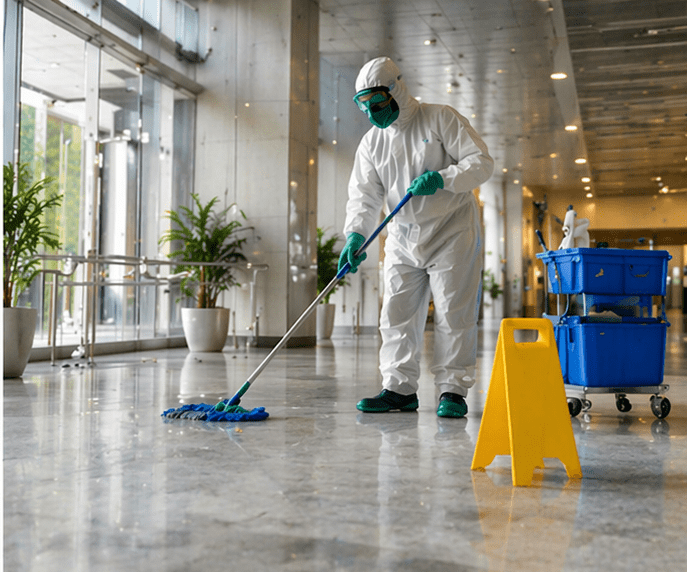
It’s the middle of the night. Something has happened — something serious. Maybe it’s a traumatic accident. Maybe you’ve discovered a deceased family member. Maybe a tenant has left behind a property in an unthinkable condition. Your hands are shaking as you pick up the phone.
You search emergency biohazard cleaning Glasgow You find a number. You call.
But what actually happens next?
Most people in that moment have no idea what to expect. They don’t know if someone will actually answer. They don’t know if a team will really arrive at 3am. They don’t know what the process looks like, how long it takes, or whether they need to be there the whole time.
This guide walks you through exactly what happens when you call Dublcheck BioCleaning Glasgow in an emergency — hour by hour, step by step — so that if you ever need us, you already know we’ve got you.
When you call 0141 370 0504 at any hour, a real person answers. Not a voicemail. Not an automated system. Not a call centre in another city. A trained member of our Glasgow team who understands that biohazard emergencies do not respect business hours.
That call is the beginning of everything.
We’ll ask you a few calm, straightforward questions:
We are not asking these to fill out a form. We are asking because the answers shape the team we dispatch, the equipment we load, and how quickly we can reach you. A decomposition scene in a high-rise flat in Glasgow’s East End requires different preparation than a needle sweep in a Southside void property. Every minute of preparation before we arrive saves time on site — and in biohazard situations, time matters.
Once we have the details, we mobilise immediately. Our response vehicles are stocked and ready at all times — this is not a service where we scramble for supplies in the morning. Every van carries:
In Glasgow and surrounding areas, our target is to be on-site within two hours of your call — and in many cases, significantly faster depending on your location.
If you are calling on behalf of a family member or managing a tenanted property, you do not need to be physically present when we arrive. We can coordinate with:
We handle that coordination so you don’t have to manage it during one of the most difficult moments you’ll face.
Our team arrives in plain, unmarked vehicles when discretion is needed. Your neighbours do not need to know what has happened, and your right to privacy during a difficult moment is something we take seriously and protect as standard.
Before any cleaning begins, we conduct a thorough rapid site assessment. This typically takes 15 to 30 minutes and covers:
Biohazards spread far beyond what the naked eye can see. Bloodborne pathogens, decomposition fluids, and airborne bacteria migrate into porous materials, subfloors, wall cavities, and ventilation systems. We map the full contamination zone before touching anything.
Particularly important in hoarding situations, fire-damaged properties, or locations where contamination has been present for an extended period. We identify any structural risks before our team enters.
Some biohazards require the space to be sealed and air-purified before cleaning begins. Others require controlled airflow to prevent cross-contamination to other areas of the building — especially relevant in Glasgow tenements with shared stairwells and communal closes.
If the property may be subject to an insurance claim, a legal process, or a police investigation, we identify and preserve relevant items and surfaces before cleaning begins. This protects you legally and financially.
All biohazardous materials are removed first. This includes contaminated soft furnishings, carpeting, clothing, bedding, and any porous materials that cannot be safely decontaminated in place.
Every item is placed into sealed clinical waste bags, logged, and prepared for regulated disposal under SEPA (Scottish Environmental Protection Agency) guidelines. Nothing is thrown into a general skip. Everything is tracked from your property to licensed disposal — and you receive documentation of that chain.
Using hospital-grade, EPA-registered antimicrobial agents, every affected surface is treated. This goes far beyond a standard deep clean. We are eliminating dangerous pathogens including:
We use ATP bioluminescence testing to verify that surfaces have been decontaminated to clinical standards. This is equipment most cleaning companies don’t carry. We use it on every job as standard, and the results go into your documentation report.
One of the things that stays with people after a traumatic incident — sometimes for years — is smell. Biohazard odours are not removed by surface cleaning alone, and masking them with air freshener is not a solution.
We use thermal fogging and ozone treatment to neutralise odour molecules at a molecular level. This is especially important in:
Before we leave, we conduct a full documented walkthrough. You receive a formal report that includes:
This is the documentation your insurance company, housing association, local authority, or solicitor will ask for. We provide it as standard — not as a paid extra.
This is something most biohazard cleaning companies don’t mention, but it defines how we work.
The person calling us at 2am is rarely in a neutral emotional state. They may have just discovered a family member. They may be a landlord who is also quietly grieving a long-term tenant. They may be professionally composed on the outside and completely falling apart on the inside.
Our technicians are trained in psychological first aid and mental health awareness. This doesn’t mean we are counsellors — but it means we know how to be present without being intrusive, how to work with quiet efficiency without feeling cold, and how to treat every space we clean with the same respect we would want shown in our own homes.
We have established links with victim support organisations, mental health services, and bereavement charities across Glasgow. If you need a referral or want to be signposted to additional support before we leave, we will always do that.
We don’t hand you a card and disappear. We make sure you know where to turn next.
Honest timelines matter. Here is a realistic guide:
| Scenario | Typical Duration |
|---|---|
| Needle sweep / sharps removal | 2 – 4 hours |
| Bodily fluid contamination (single room) | 3 – 6 hours |
| Crime scene or trauma scene cleanup | 6 – 12 hours |
| Unattended death / decomposition (contained) | 1 – 2 days |
| Unattended death / decomposition (extensive) | 2 – 4 days |
| Sensitive hoarding clearance | Multiple visits over days or weeks |
| Drug den clearance and decontamination | 4 – 8 hours |
We give you a realistic, honest timeline when we arrive — not an optimistic one designed to win your business, and not an inflated one designed to justify a higher quote.
Biohazard cleaning is specialist work and it is priced accordingly. But we believe pricing should be transparent and fair — never exploitative of people in crisis.
We provide a full written quote before any work begins. There are no hidden charges for:
In many cases, yes. Biohazard and trauma cleaning is covered under:
We provide all the documentation your insurer will require, and we can liaise directly with loss adjusters on your behalf. If you are unsure whether your policy covers the situation, call us anyway — we can advise you on what to ask your insurer.
Yes, without exception. Biological hazards and traumatic incidents do not follow business hours, and neither do we. Our team is on call 24 hours a day, 7 days a week, 365 days a year — including Christmas Day, New Year’s Day, and every bank holiday on the Scottish calendar. When you call 0141 370 0504, someone answers.
We cover the whole of Glasgow and the surrounding areas including the West End, East End, Southside, Govan, Partick, Shawlands, Dennistoun, Maryhill, Drumchapel, Easterhouse, and outlying areas including Paisley, Motherwell, Hamilton, East Kilbride, Clydebank, and Dumbarton. If you are unsure whether we cover your location, call us — we will tell you honestly.
No. You do not need to be present. We regularly work with keyholders, property factors, police liaison officers, housing association representatives, and solicitors. If you prefer not to be on site during the clean — which many clients choose — we will send you full photographic documentation and a detailed report once the work is complete.
We operate in plain, unmarked vehicles by default when a situation calls for discretion. We understand that the circumstances that require biohazard cleaning are among the most private a person or family can face. Discretion is not an option we charge extra for — it is simply how we work.
Completely different. A standard deep clean uses domestic-grade cleaning products and standard equipment. Biohazard cleaning uses hospital-grade, EPA-registered antimicrobial agents, full PPE including respiratory protection, sealed clinical waste disposal under SEPA regulations, and laboratory-standard ATP testing to verify decontamination. Attempting to clean a biohazard scene with domestic products does not eliminate pathogens — it can actually spread contamination further.
Yes, where necessary. Biohazards penetrate porous materials — carpets, soft furnishings, wooden flooring, and even subfloor materials cannot always be decontaminated in place. When removal is required, we will tell you before we begin, explain exactly what needs to go and why, and handle the disposal legally and documented under SEPA waste carrier regulations.
Odour from a biohazard scene is caused by biological compounds that cannot be removed by surface cleaning alone. We use thermal fogging and ozone treatment to neutralise odour molecules at the molecular level. In severe cases — particularly after extended decomposition — multiple treatment sessions may be needed. We will be honest with you about this from the outset rather than overpromising a single-visit solution.
You receive a full post-clean report including photographic before-and-after documentation, a list of all substances removed and disposal methods used, ATP test results confirming clinical-standard decontamination, a hazardous waste transfer note, and a signed clearance certificate confirming the property is safe for re-entry. This documentation satisfies the requirements of insurers, housing associations, local authorities, and legal proceedings.
Disposing of clinical or hazardous biological waste without a SEPA waste carrier licence is illegal under Scottish environmental law. Beyond the legal issue, attempting to clean a biohazard scene without proper PPE and training puts your health at serious risk — pathogens including Hepatitis B can survive on surfaces for up to 7 days and remain infectious. The legal and health risks of DIY biohazard cleaning are significant, and we strongly advise against it.
This is one of the most common questions we receive. In short: emergency services including Police Scotland and the Scottish Ambulance Service are not responsible for cleaning a property after an incident. That responsibility falls to the property owner, landlord, or next of kin, depending on the circumstances. If you are unsure of your responsibilities in a specific situation, call us — we can advise you or point you to the right legal resource.
Yes. Our technicians hold certifications specific to biohazard handling in Scotland, including bloodborne pathogen training, Type 3 asbestos awareness, and hazardous waste transport licences. We are SEPA compliant and operate in accordance with Health Protection Scotland guidelines. We maintain comprehensive insurance that protects property owners, tenants, and all parties involved. We are happy to provide evidence of any of these credentials before work begins.
Yes. We work with property management companies, letting agents, housing associations, and local councils across Glasgow on both reactive emergency callouts and scheduled contracts. If you manage a portfolio of properties, we can discuss a preferred contractor arrangement that guarantees response times and agreed pricing. Call us to discuss.
First, do not enter or attempt to clean the property until Police Scotland has confirmed the scene has been released. Once released, call us immediately. We will advise you on your legal obligations as a landlord, handle the full decontamination, provide all documentation for your insurance claim, and help you get the property safely back to a lettable condition as quickly as possible — with the discretion and sensitivity the situation deserves.
Yes — this is a standard part of every job we complete. Our post-clean report is specifically structured to meet the requirements of insurers, housing associations, local authority environmental health departments, and legal proceedings. We can also liaise directly with your loss adjuster or housing association contact if that is helpful.
The best time to store our number is right now — before anything has happened.
If you are a landlord, property manager, or letting agent in Glasgow.If you work in social care, healthcare, or emergency services across Glasgow and the surrounding areas, keep it to hand. Share it with your team.
Because when something happens — and in this city, as in every city, it will happen to someone you know or a property you manage — the last thing you want to be doing is searching for a company you’ve never heard of, reading reviews at 2am, in the worst moment of someone’s life.